
Dr. David King tackled this failing restoration with ZenSeal sealer, ZenFlex One Files, and Simplicore obturation.
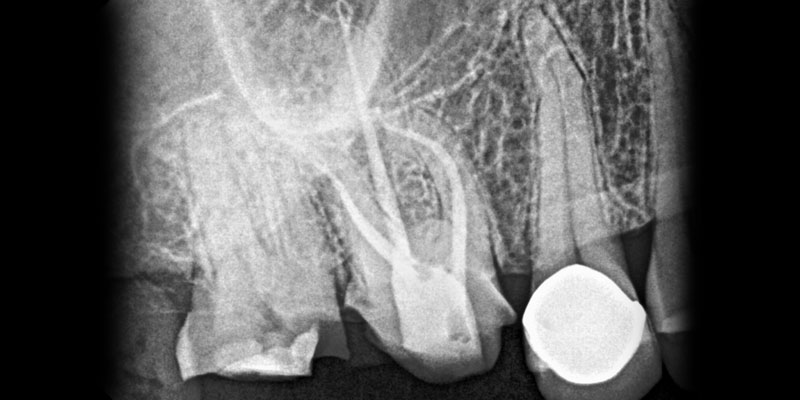
Dr. David King treats a failing restoration
The patient came in for a crown re-do on tooth No. 2 and pain on tooth No. 3 (Figure 1). 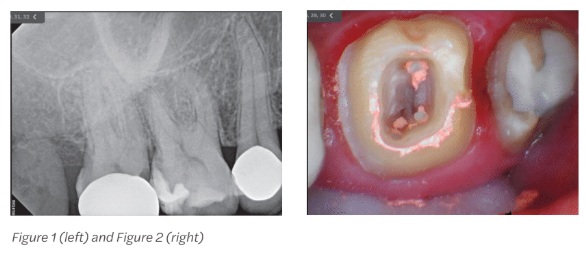
The patient presented with a failing restoration on tooth No. 2 and caries/decay extending greater than two-thirds occlusal table. The procedure consisted of removal of gross decay, any fractured enamel or old restorations, replacement of tooth structure with a buildup, and placement of a crown to cover and protect the tooth and ensure the patient can return to normal function.
The structure of tooth No. 2 was reduced using a high-speed handpiece, and a provisional crown was fabricated and secured with temporary cement material.
The patient returned for root canal treatment on tooth No. 3. The doctor discussed
the severity of conditions and what treatments were medically necessary to eliminate the decay. Treatment options were discussed, as well as advantages and disadvantages of each treatment option, and the patient opted for endodontic therapy.
The decay was removed, and access to the pulpal canals was exposed with the pulpal chamber completely unroofed.
- Rotary and hand files were used to debride and shape the root canals.
- The canals were rinsed withNaOCIand EDTA.
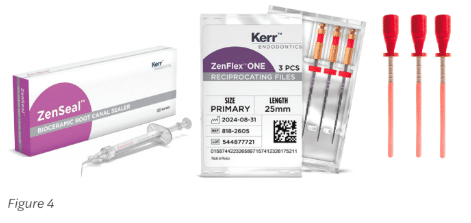
- ZenFlex™ ONE Primary Files (.25/.06/25 mm) were used to instrument to working length (Figure 4).
- The canals were dried before placingZenSeal™ Bio-ceramic Sealer (Figure 4).
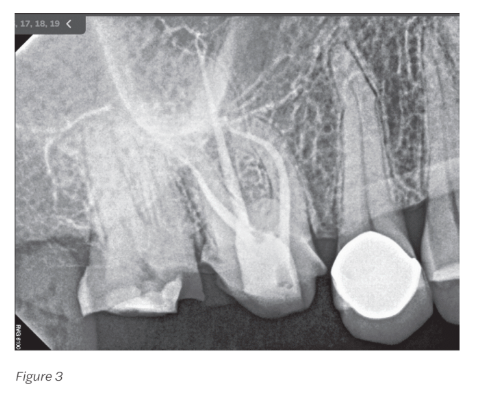
- The canals were obturated usingSimpliCore™ forZenFlex™ ONE Primary (Figures 2 and 3).
A core build-up was placed on tooth No. 3 to prevent bacterial reinfection, provide essential support for a final crown, and reduce increased risk of tooth fracture or RCT failure.
This case study was provided by Kerr.
Dr. Josette Camilleri looks at various types of seals that can be achieved using classic obturation techniques. https://endopracticeus.com/archived-ce/root-canal-obturation-hermetic-or-biological-seal/
Stay Relevant With Endodontic Practice US
Join our email list for CE courses and webinars, articles and more..