
CE Expiration Date: January 1, 2029
CEU (Continuing Education Unit):2 Credit(s)
AGD Code: 070
Educational aims and objectives
This self-instructional course for dentists looks at the manufacturing process of endodontic files, the heat-treatment manufacturing process utilized for the latest generation of multi-phase heat-treated files, and their role in minimizing instances of file separation.
Expected outcomes
Endodontic Practice US subscribers can answer the CE questions by taking the quiz online at endopracticeus.com to earn 2 hours of CE from reading this article. Correctly answering the questions will demonstrate the reader can:
- Identify causes and contributing factors to file breakage.
- Realize the significance of the introduction of nickel-titanium (NiTi) alloy for manufacturing engine-driven instruments.
- Identify how the phases of heat-treated instruments affect a material’s maximum efficiency under demanding service conditions.
- Read about an enhanced generation of file launched in 2024 that was implemented by customized heat treatments.
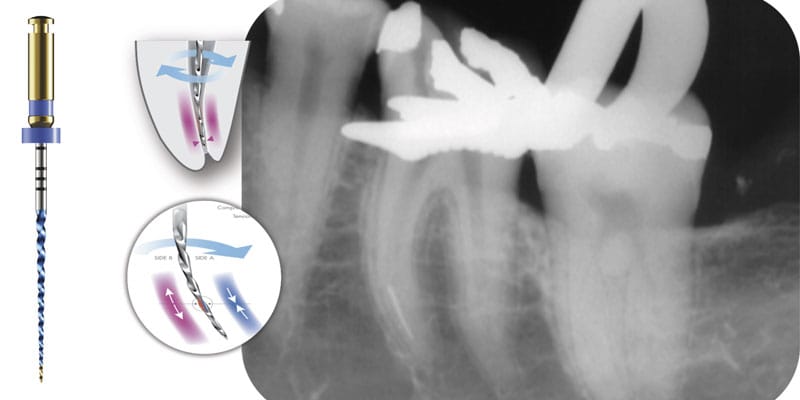
Drs. Carlos A. Spironelli Ramos and Ken Serota discuss the heat-treatment manufacturing process
Endodontic engine-driven files have significantly transformed modern endodontic practices by increasing operational efficiency and precision in root canal instrumentation. Nonetheless, file separation continues to be a prevalent concern. Various strategies have been devised to mitigate this risk and reduce the likelihood of file breakage. This article delves into the heat-treatment manufacturing process utilized for the latest generation of multi-phase heat-treated files, highlighting their critical role in minimizing instances of file separation.
Understanding file breakage: causes and contributing factors
Before discussing preventive measures, it is important to thoroughly understand the primary causes of endodontic file breakage. Endodontic files, particularly engine-driven ones, encounter mechanical stress during operation, resulting in two primary types of failure: torsional and cyclic fatigue.
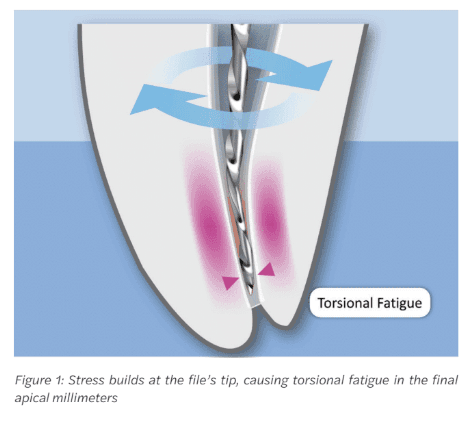
Torsional stress occurs when the file’s tip becomes lodged while the shank rotates due to the motor’s drive mechanism
(Figure 1). In this scenario, the continued rotational force creates excessive torque on the file, which can lead to its fracture. This is particularly prevalent in cases where the canal morphology is complex or when the file is operated beyond its recommended torque and rotational speed.
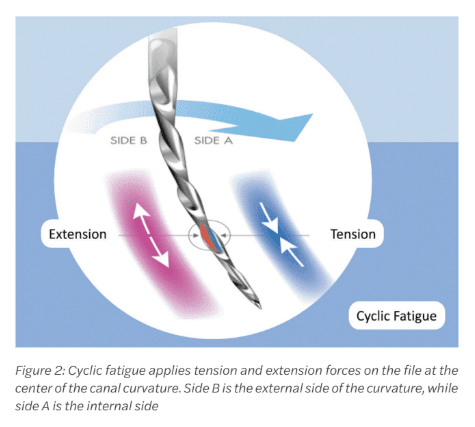
On the other hand, cyclic fatigue is attributed to the file’s repetitive bending as it navigates through the canal’s intricate curves (Figure 2).
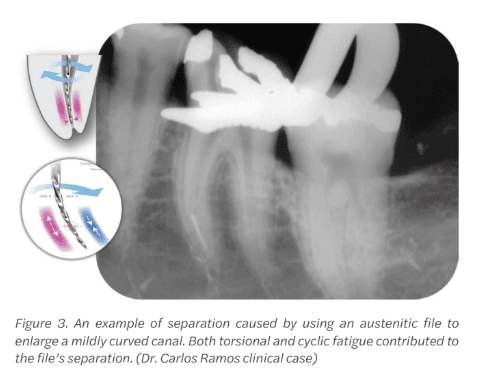
Each bending cycle subjects the metal alloy to tension and compression, gradually weakening the file’s structural integrity. Over time, the
cumulative effect of these repeated stress cycles can lead to microscopic cracks, ultimately resulting in file breakage during procedures (Figure 3).
Heat-treated NiTi engine-driven files
The introduction of nickel-titanium (NiTi) alloy for manufacturing engine-driven instruments in the early 1990s marked a significant turning point for endodontics. Over the past 35 years, there has been a remarkable increase in the development of NiTi endodontic file systems, which has led to substantial advancements in the field. Thanks to improvements in metallurgical technology, various new instruments have emerged, showcasing innovative designs, blade geometries, and thermomechanical treatments of the alloy, all of which contribute to greater efficiency in the related procedures.1-7
Heat treatment aims to achieve a material’s maximum efficiency under demanding service conditions. It can be defined as a combination of heating and cooling operations, carefully timed and applied to an alloy in a solid state to produce the desired properties. The histories of swordsmiths and cutlers clearly illustrate that the precise method for hardening steel involves plunging solid, red-hot steel into water. At the same time, toughening is achieved by tempering the quench-hardened steel at a moderate temperature.
Leading manufacturers of engine-driven files adopted post- grinding heat treatment procedures, marking the beginning of a new generationof instruments. Each company developed a unique method for heat treatment and used the resulting surface color for identification. After implementing this technology, engine-driven files became safer, with improved shaping performance, particularly when addressing anatomical challenges such as curved canals. Meanwhile, clinical studies indicated lower fracture rates associated with these heat-treated files.5,8
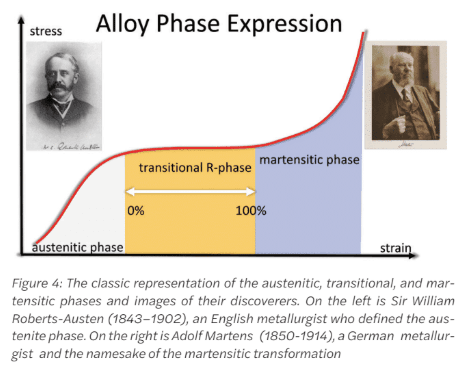
Heat treatment is essential because the properties of each alloy phase are notably different. For instance, the proportions of the austenitic phase (which is more rigid and exhibits a spring-back effect) and the martensitic phase (which is more flexible and undergoes permanent plastic deformation) influence the performance of different instruments (Figure 4). When the alloy is in its martensitic phase, the file is soft and easily bent permanently (also called controlled memory). In contrast, the austenitic phase is firm and returns to its original straight condition once the load is removed (spring-back effect). Martensitic instruments are recommended for curved canals because they are designed to better preserve the original canal path.9-12
There is no one-size-fits-all solution to every anatomical challenge
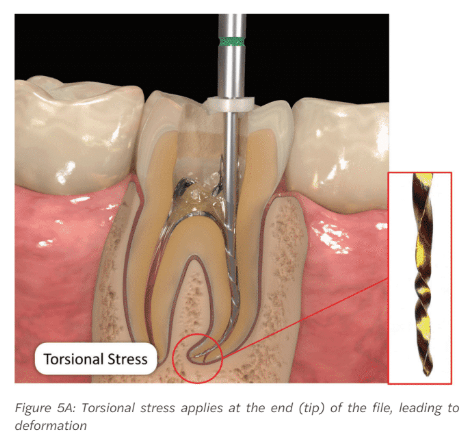
The performance analysis of heat-treated instruments shows that the expression of their alloy phase significantly influences their effectiveness. The highly flexible martensitic alloy phase in control memory instruments may hinder their ability to advance into the apical third of the canal. While instruments primarily composed of the martensitic phase provide greater flexibility, allowing them to navigate through curvatures more efficiently, they are also more prone to substantial distortion when subjected to opposing forces during apical advancement (Figure 5a). Clinically, the operator will encounter considerable challenges advancing apically due to the high level of distortion and ineffectiveness of this instrument’s cutting ability. The angle of angular deflection leading to fracture is so steep that the instrument distorts even before it cuts into the dentin walls and enlarges the canal wall.
On the other hand, engine-driven files with a high proportion of the austenitic alloy phase demonstrate better resistance to torsional fatigue. However, they are less flexible and more susceptible to cyclic fatigue separation. For instance, if an instrument becomes wedged against the canal walls and continues to rotate under heavy torque, it can quickly reach its elastic limit, leading to a torsional fracture.
Multiple expressions of alloy phases in the same working lamina
Instruments made entirely of austenitic alloy show a lower susceptibility to torsional fatigue; therefore, this phase may be preferable when the applied force leads to a more significant torsional load.13-14 Thus, it is reasonable to conclude that the operator should choose the instruments’ alloy phase to be more austenitic during the final millimeters of apical enlargement, where the tip performs its glide function.
The body of the engine-driven file primarily shapes the curvature of a root canal. This shaping occurs due to the instrument’s tapered design, which allows its widest section to engage with the pathway leading to the most apical part of the canal, thus creating a lateral cutting action. In curved areas, the section of the instrument containing more metal is less likely to break from torsional fatigue. However, it is important to recognize that cyclic fatigue can significantly elevate the risk of separation in this instrument section due to the increased metal mass. Utilizing a martensitic alloy phase would be beneficial in this context, as applying martensitic heat treatment can help reduce separation caused by cyclic tension-extension forces by enhancing the metal’s flexibility.
KP TriShade® (Kevin Peter KP, Guilin, China) engine-driven NiTi heat-treated files feature a design allowing both rotary and asymmetrical right-cutting reciprocation motion. This enhanced generation was internationally launched in 2024, implementing custom
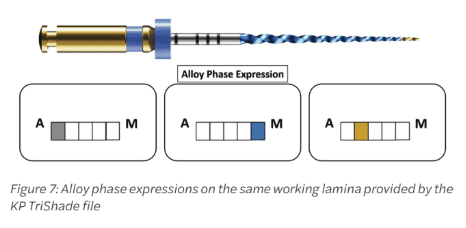
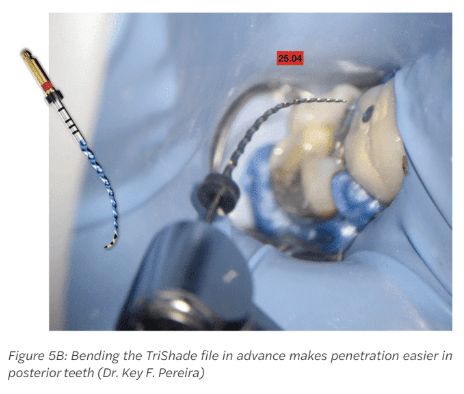
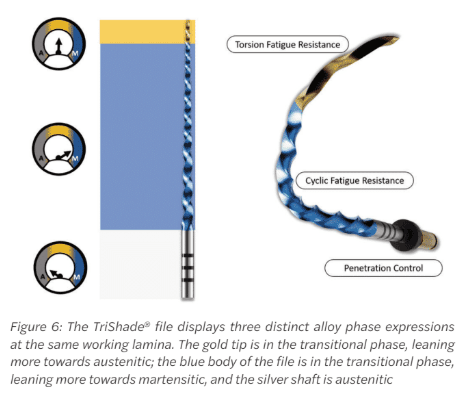
ized heat treatments within the same lamina, balancing torsional strength and high flexibility across various regions of the working tip of the file. Through three specialized heat treatments, TriShade® achieves an optimal balance between torsional resistance (more austenitic in the last four millimeters of the apical segment of the file) and increased flexibility (more martensitic) in the file body, making the file pre-bendable (Figure 5b). Additionally, the file’s shaft is entirely austenitic, which improves control during up-and-down instrumentation movements (Figure 6).
The last four millimeters of the apical segment underwent a heat treatment that produced a more dominant austenitic phase, resulting in a gold stain. The more martensitic body of the file generated a blue color. Furthermore, the austenitic shaft underwent thermal treatment, leading to a silver hue.15 This combination of thermal treatments yields differentiated performance for each instrument
 segment, enhancing resistance to the two primary challenges encountered during instrumentation (torsional and cyclic fatigue) at varying lengths of the same file.
There is a trend towards customized heat treatments based on the instrument’s metallic mass. Different manufacturers have introduced systems with differentiated thermal treatment within sequences of files16 but not within the same file, supporting the original notion that the same heat treatment should not simply be applied to address the two separation forces.
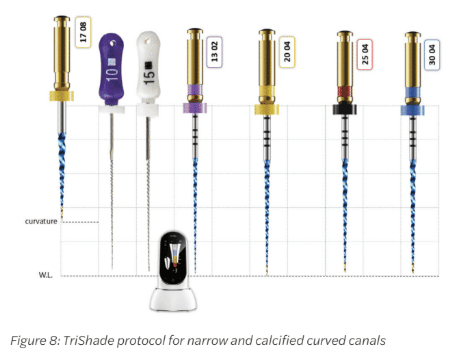
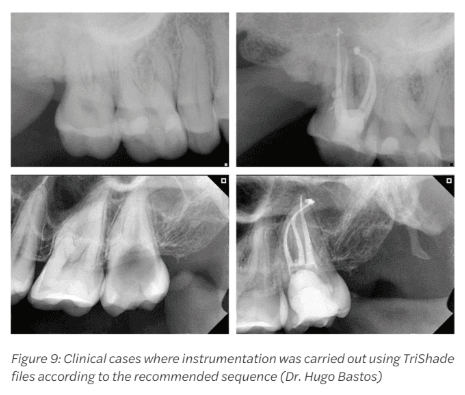
TriShade represents a significant advancement in manufacturing processes by demonstrating a precise method for achieving heat treatment of the file in three distinct alloy phase expressions across various segments of the working part.(Figure 8 and 9).17
Final remarks
Instrument separation during shaping procedures with rotary nickel-titanium (NiTi) systems is undesirable and can lead to complex resolutions. The wide range of fracture rates reported in the literature — ranging from 1.98% to 26% — highlights the unpredictability of this issue in clinical practice. Various factors may contribute to instrument separation, including instrument design, improper instrumentation techniques, inadequate irrigation, using worn or damaged files, motor kinematics, root canal anatomy, and operator experience.
Preventing the breakage of endodontic files is a multifaceted challenge that requires careful attention to technique, equipment maintenance, and case-specific factors. Operators can significantly reduce the risk of file separation during endodontic procedures by implementing established methods such as glide path preparation, intelligent segment torque-controlled motors, adequate irrigation, and regular file inspection.
Additionally, extensive clinical research has provided insights into the benefits of different heat treatments for files and the various phases achieved. It is important to recognize that different heat treatments yield distinct instrument performance, thereby helping to mitigate instrument separation at various stages of instrumentation. As technology continues to evolve, further innovations in torque-controlled instrumentation techniques will likely enhance the safety and predictability of endodontic care.
Besides writing about engine-driven endodontic files, Dr. Carlos A. Spironelli Ramos has shared his expertise with Endodontic Practice US readers previously. Read what he thinks about the ideal endodontic interappointment medicament here: https://endopracticeus.com/industry-news/what-is-the-ideal-endodontic-interappointment-medicament-and-what-are-its-most-effective-placement-and-removal-techniques/.
References
ReferenceS
- Gavini G, Santos MD, Caldeira CL, Machado MEL, Freire LG, Iglecias EF, Peters OA, Candeiro GTM. Nickel-titanium instruments in endodontics: a concise review of the state of the art. Braz Oral Res. 2018 Oct 18;32(suppl 1):e67. doi: 10.1590/1807-3107bor-2018.vol32.0067.
- Haapasalo M, Shen Y. Evolution of nickel-titanium instruments: from past to future. Endod Topics. 2013;29(1):3–17. https://doi.org/10.1111/etp.12049.
- Peters OA. Current challenges and concepts in the preparation of root canal systems: a review. J Endod. 2004 Aug;30(8):559-567. doi: 10.1097/01.don.0000129039.59003.9d.
- Shen Y, Coil JM, Zhou H, Zheng Y, Haapasalo M. HyFlex nickel-titanium rotary instruments after clinical use: metallurgical properties. Int Endod J. 2013 Aug;46(8):720-729. doi: 10.1111/iej.12049. Epub 2013 Jan 21.
- Shen Y, Zhou HM, Zheng YF, Peng B, Haapasalo M. Current challenges and concepts of the thermomechanical treatment of nickel-titanium instruments. J Endod. 2013 Feb;39(2):163-172. doi: 10.1016/j.joen.2012.11.005.
- Zhou H, Peng B, Zheng YF. An overview of the mechanical properties of nickel-titanium endodontic instruments. Endod Topics. 2013;29:42–54. https://doi.org/10.1111/etp.12045.
- Zupanc J, Vahdat-Pajouh N, Schäfer E. New thermomechanically treated NiTi alloys – a review. Int Endod J. 2018 Oct;51(10):1088-1103. doi: 10.1111/iej.12924. Epub 2018 Apr 19.
- Gambarini G, Piasecki L, Di Nardo D, Miccoli G, Di Giorgio G, Carneiro E, Al-Sudani D, Testarelli L. Incidence of Deformation and Fracture of Twisted File Adaptive Instruments after Repeated Clinical Use. J Oral Maxillofac Res. 2016 Dec 28;7(4):e5. doi: 10.5037/jomr.2016.7405.
- Sousa-Neto MD, Silva-Sousa YC, Mazzi-Chaves JF, Carvalho KKT, Barbosa AFS, Versiani MA, Jacobs R, Leoni GB. Root canal preparation using micro-computed tomography analysis: a literature review. Braz Oral Res. 2018 Oct 18;32(suppl 1):e66. doi: 10.1590/1807-3107bor-2018.vol32.0066.
- Arslan H, Yildiz ED, Gunduz HA, Sumbullu M, Bayrakdar IS, Karatas E, Sumbullu MA. Comparative study of ProTaper gold, reciproc, and ProTaper universal for root canal preparation in severely curved root canals. J Conserv Dent. 2017 Jul-Aug;20(4):222-224. doi: 10.4103/JCD.JCD_94_17.
- Bürklein S, Hinschitza K, Dammaschke T, Schäfer E. Shaping ability and cleaning effectiveness of two single-file systems in severely curved root canals of extracted teeth: Reciproc and WaveOne versus Mtwo and ProTaper. Int Endod J. 2012 May;45(5):449-61. doi: 10.1111/j.1365-2591.2011.01996.x. Epub 2011 Dec 22.
- Plotino G, Ahmed HM, Grande NM, Cohen S, Bukiet F. Current Assessment of Reciprocation in Endodontic Preparation: A Comprehensive Review–Part II: Properties and Effectiveness. J Endod. 2015 Dec;41(12):1939-1950. doi: 10.1016/j.joen.2015.08.018.
- Thu M, Ebihara A, Adel S, Takashi Okiji T. Analysis of torque and force induced by rotary nickel-titanium instruments during root canal preparation: a systematic review. Appl Sci. 2021; 11(7): 3079. https://doi.org/10.3390/app11073079.
- Lopes HP, Gambarra-Soares T, Elias CN, Siqueira JF Jr, Inojosa IF, Lopes WS, Vieira VT. Comparison of the mechanical properties of rotary instruments made of conventional nickel-titanium wire, M-wire, or nickel-titanium alloy in R-phase. J Endod. 2013 Apr;39(4):516-520. doi: 10.1016/j.joen.2012.12.006. Epub 2013 Jan 30.
- Tian H, Schryvers D, Liu D, Jiang Q, Van Humbeeck J. Stability of Ni in nitinol oxide surfaces. Acta Biomater. 2011 Feb;7(2):892-899. doi: 10.1016/j.actbio.2010.09.009. Epub 2010 Sep 16.
- Ramos, CAS. Endodontic files with hybrid metallurgical elastic characteristics and identification colors. US20230320815A1. https://patents.google.com/patent/US20230320815A1/en?q=(carlos+alberto+spironelli+ramos)&oq=carlos+alberto+spironelli+ramos2023. Accessed July 16, 2025.
- Wei, K (2024). Root Canal File Processing Equipment (China Patent No. 202421293202.5). CN State Intellectual Property Office.
Stay Relevant With Endodontic Practice US
Join our email list for CE courses and webinars, articles and more..